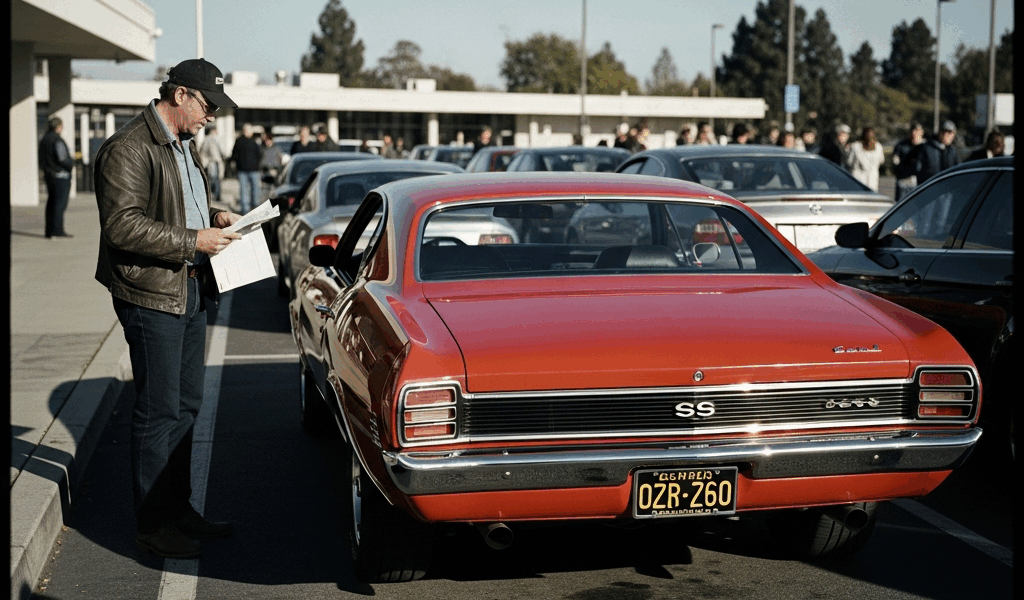
You just bought a classic car — or you’re about to — and the registration process turns out to be nothing like registering a normal vehicle. Different title categories, mileage restrictions, inspection exemptions, and insurance requirements that don’t exist for modern cars. Here’s how classic car registration actually works and what to watch out for.
Classic vs Antique vs Historic — What the Title Category Means
Every state has its own terminology, and the labels aren’t interchangeable. “Antique,” “Historical,” “Classic,” and “Vintage” mean different things in different states, with different age requirements and different restrictions on how you can use the car.
Most states define antique or historic vehicles as 25 years old or older. Some use 20 years, a few use 30. The age cutoff matters because it determines which registration category your car qualifies for and which benefits come with it.
The critical distinction most people miss: historical or antique plates typically come with usage restrictions. Many states limit vehicles with historic plates to parades, exhibitions, club meetings, and occasional pleasure driving. Some cap annual mileage at 1,000 to 5,000 miles. If you’re planning to daily-drive your classic car, historic plates may not be legal for that use in your state. This is the most common mistake people make — they see the lower registration fee, apply for historic plates, and don’t realize they’ve technically agreed to severe mileage limits.
Benefits of Antique Registration (And What You Give Up)
What you get: Significantly lower registration fees — often $25 to $50 for a one-time or very long-term registration versus $100+ annually for standard plates. No annual safety inspections in most states. No emissions testing or smog checks. Permanent plates in many states (register once, keep the plates for life).
What you give up: The freedom to drive the car whenever and wherever you want. Mileage caps, show-and-display restrictions, and in some states, restrictions on using the car for commuting or errands. Some states also require that you own a separate daily-driver vehicle to qualify for historic plates — the logic being that the classic car is a hobby vehicle, not primary transportation.
Whether the trade-off makes sense depends entirely on how you plan to use the car. Weekend cruiser that attends a few shows a year? Historic plates are perfect. Daily driver or road trip car? Standard registration with regular plates is the safer choice, even if it costs more.
Title Transfer for Classic Cars — What’s Different
Transferring title on a classic car involves problems that simply don’t exist with modern vehicles.
Old titles with a different owner: A car that’s been sitting in a barn for 20 years may have a title in the name of someone who’s deceased, moved, or unreachable. You need a proper chain of title — a signed-off title from the last titled owner, or a legally obtained transfer through estate or court processes. Some states accept a bill of sale plus a VIN verification for cars over a certain age.
Lien notations from defunct banks: A 1970 Chevelle might have a lien notation from a savings and loan that closed in 1985. Clearing a lien from a bank that no longer exists requires documentation that the bank’s assets were absorbed by another institution, or a court order releasing the lien. This is tedious but resolvable.
No title at all: Barn finds and project cars frequently come without any title documentation. Most states offer a bonded title process: you purchase a surety bond (typically 1.5x the car’s value) guaranteeing that you’re the rightful owner, and the state issues a bonded title. After a waiting period (usually 3-5 years), the bond requirement expires and you receive a clean title. Some states also have an abandoned vehicle process for untitled cars found on private property.
VIN verification is usually required for any classic car title transaction. A law enforcement officer or certified VIN inspector physically examines the car and confirms the VIN matches the documentation. This is a standard step — schedule it through your local DMV or police department.
Classic Car Insurance — What You Need Before Plating
Most states require proof of insurance before issuing plates, and classic car insurance works fundamentally differently from standard auto insurance.
The key concept: agreed value vs. stated value. Standard insurance uses book value (what the insurance company says your car is worth based on depreciation tables). For a classic car, book value is meaningless — a frame-off restored 1967 Mustang might book at $15,000 but be worth $45,000 on the market. Agreed value policies establish the car’s worth upfront through appraisal, and that’s what gets paid in a total loss. This is the only type of policy that makes sense for a classic car.
The right insurers: Hagerty, Grundy, and American Collectors specialize in classic and collector vehicles. Their policies are designed for cars that appreciate rather than depreciate, they understand agreed value, and their premiums reflect the limited mileage most classics see. A Hagerty policy on a $30,000 classic car might run $300-500 per year — dramatically less than standard insurance — because the usage restrictions reduce risk.
Standard insurance companies (State Farm, Geico, Progressive) can insure a classic car, but they’ll typically use stated value or actual cash value, which almost always undervalues the vehicle. Use a specialist insurer. Get the policy in place before you go to the DMV.
State-by-State Considerations
California: Strict emissions, but vehicles manufactured before January 1, 1976 are exempt from smog checks under SB-100. Post-1975 classics require biennial smog certification. California’s historic vehicle plate is cosmetic (vintage-look plates) with no inspection exemptions beyond the pre-1976 smog exemption.
Texas: Very generous antique vehicle registration. Vehicles 25+ years old qualify for antique plates with no annual inspection requirement and no mileage restrictions — one of the most permissive states for classic car use.
Florida: Vehicles 30+ years old qualify for antique plates. No mileage restrictions, no annual inspection. Florida is extremely classic-car friendly.
New York: Historical plates available for vehicles 25+ years old but with show-and-display restrictions. The car cannot be used for daily transportation. You must own a registered daily-driver vehicle to qualify.
For any state, check these four variables before applying: age cutoff, mileage or usage restrictions, inspection requirements, and whether you need a separate daily-driver vehicle on the same insurance policy. Your state’s DMV website lists the specific requirements, but the language is often buried in subsections — call the DMV directly if the website isn’t clear.



Stay in the loop
Get the latest classic car craze updates delivered to your inbox.