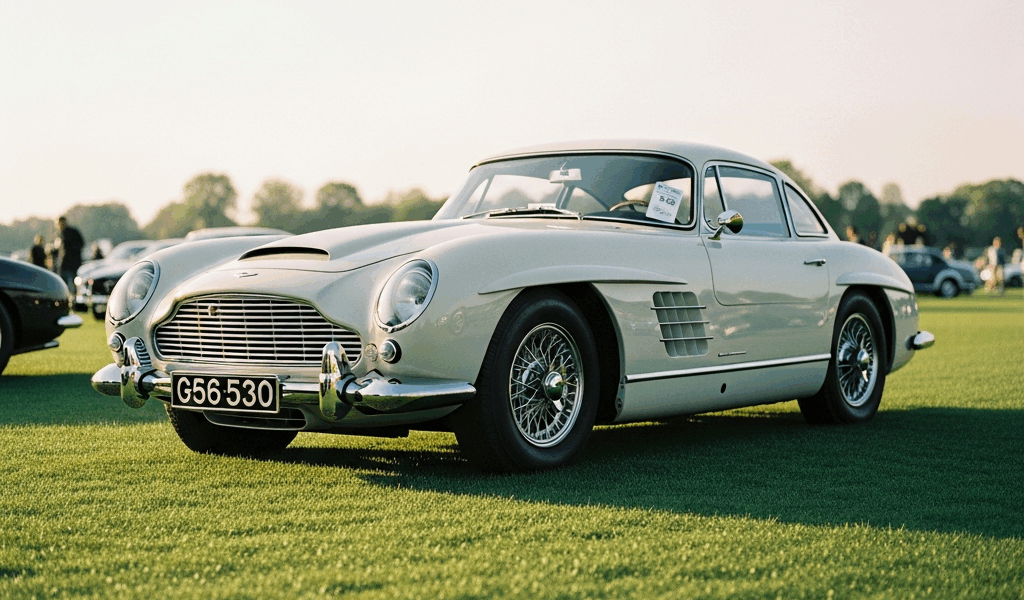
Collectors hunting European and Japanese iron overseas just got the clarity they needed. Vehicles 25 years old or older are fully exempt from the Trump administration’s new 25% auto tariff — confirmed in a presidential proclamation issued April 2, 2025, the day before the tariff took effect. Under HTS heading 9903.94.04, the exemption applies regardless of origin, make, or model. Your 964 Porsche, R33 Skyline, or E34 M5 clears customs at the standard 2.5% base duty. No 25% surcharge. No FMVSS compliance headaches.
The full cost picture is slightly more nuanced than early headlines suggested. Section 232 tariffs don’t apply to classics — but reciprocal tariffs do, pushing the effective total for most EU and Japanese imports to approximately 15% all-in. That figure includes the 2.5% base rate; it doesn’t stack on top of it. UK-origin cars land at 12.5% total. USMCA-origin vehicles stay at 2.5%.
A February 2026 Supreme Court ruling struck down the IEEPA-based reciprocal tariff structure, and the administration responded by imposing a 10% global tariff under Section 122 of the Trade Act of 1974. Classics from most origins now sit at 12.5% total (10% + 2.5%) — down slightly from the prior 15%.
Modern vehicles — anything under 25 years old — face the full 25% Section 232 tariff plus reciprocal fees, totaling roughly 27.5% or higher depending on origin. That gap is doing real work in the market right now.
What Barrett-Jackson and the Legal Community Are Saying
“As passionate stewards of the collector car hobby, we deeply appreciate the laws and regulations that help preserve classic cars for future generations. Maintaining the process for importing vehicles benefits enthusiasts, collectors and the entire automotive community.”
— Craig Jackson, Chairman & CEO, Barrett-Jackson
Attorney John Draneas, writing in Sports Car Market, identified the silver lining for domestic sellers: “If importing a car from Europe is going to cost 25% more, the cars in this country are going to be worth more.” That logic applies directly to modern performance cars under the 25-year threshold — but it also highlights why the exemption is such a meaningful advantage for classic collectors sourcing abroad.
The 25-Year Rule — Exactly How It Works
Eligibility is based on actual manufacture date, not model year. A car built in January 2001 qualifies in January 2026; a December 2001 build waits until December 2026. The one-day difference matters. CBP is unambiguous that 24 years and 364 days still triggers the full modern vehicle tariff rate. Importers should have build records — not just window stickers — ready at the port.
The 25-year rule traces back to the Imported Vehicle Safety Compliance Act of 1988, which already exempted cars of that age from FMVSS safety and EPA emissions compliance. Entry documentation remains straightforward: DOT Form HS-7 (Box 1) and EPA Form 3520-1 (Code E). The tariff exemption layers on top of that existing framework without adding new paperwork.
Restoration work — rebuilt engines, repainted bodywork, upgraded brakes — does not affect eligibility, provided the original VIN and chassis identity are intact. Importers should retain all restoration invoices to demonstrate continuity of identity if CBP questions the vehicle’s vintage at entry.
The Parts Problem Collectors Cannot Ignore
The exemption covers the car itself. It does not cover parts. Starting May 3, 2025, automotive parts imported from abroad are subject to an additional 25% tariff — and the $800 de minimis exemption for small packages has been eliminated. For collectors restoring European or Japanese classics with overseas sourcing — Weber carburettors, Getrag gearbox components, JDM-spec trim pieces — this is a meaningful cost increase with no current relief mechanism.
What the Market Is Doing Right Now
The exemption has already moved the needle. Classic car imports surged 37% year-over-year in April 2025, driven directly by collectors front-running what they feared might be broader tariff exposure. That demand is compressing availability and pushing prices upward — particularly in the JDM segment, where 1999 Nissan Skyline GT-R R34 values have climbed 41%, with average transaction prices now touching $120,000.
The 2026 eligibility class adds real texture to that story. Early-2001 builds — BMW E46 M3, Honda EP3 Civic Type R, Subaru WRX STI “Bugeye,” Nissan Silvia S15 Spec-R, Ferrari 360 — begin crossing the threshold this year, and the scramble for clean, documented examples is already underway at European dealers and Japanese auction houses.
At the top of the market, the tariff arithmetic is staggering. The 1954 Mercedes-Benz W196R sold for $53.9 million at the Mercedes-Benz Museum in Stuttgart in 2025; the 1964 Ferrari 250 LM fetched $36.3 million in Paris. A 25% tariff on either would have represented eight-figure exposure. The exemption keeps those transactions viable for American buyers without a second thought.
For collectors with European or Japanese targets on their list, the window is open — but watch the parts budget closely, confirm your manufacture date before committing, and track the Section 122 tariff calendar. That 150-day clock from February 2026 will matter if Congress doesn’t act.

Stay in the loop
Get the latest classic car craze updates delivered to your inbox.