Porsche 911 IMS Bearing Failure — Which Models Are Affected and How to Prevent It
The IMS bearing situation has gotten complicated with all the misinformation flying around. As someone who spent eight years working on Porsche 911s full-time, I learned everything there is to know about this particular failure mode — the hard way, twice. Today, I will share it all with you.
Two engines failed on my watch because of IMS bearing collapse. Both were preventable. That’s the whole reason this article exists.
Which Models Have the IMS Bearing Issue
But what is the IMS bearing problem, exactly? In essence, it’s a design flaw in the Intermediate Shaft bearing found in certain water-cooled 911 engines. But it’s much more than that — it’s a ticking clock inside an otherwise exceptional car, and knowing whether your 911 has one determines everything about how you should approach ownership.
The affected platforms are the 996 (1999–2005) and the early 997.1 (2005–2008). That’s it. The 997.2 from 2009 onward is safe. The 991 is safe. Your 993? Completely different problem altogether.
Within the 996 lineup, the base Carrera and Carrera 4 carry the risk. The 996 Turbo and 996 GT2 do not — they use a different engine architecture. The 996 GT3 variants also dodge the issue due to their unique internals. I’ve confirmed this dozens of times pulling engine codes and cross-referencing Porsche technical bulletins in the factory database.
The 997.1 follows a similar pattern. Base Carrera and Carrera 4, again. The Carrera S and 4S from that generation are largely spared due to structural differences, though early production runs — think 2005 and early 2006 — still warrant a closer look. By 2009, Porsche had quietly redesigned the bearing itself, and the problem disappeared.
Engine codes matter here. In the 996, you’re dealing with the M96 and M97 families. The 997.1 ran the MA1 engine. The M97.70 used in certain turbocharged applications is a different animal entirely. When you’re shopping one of these cars, demand the engine code from whoever is selling it. Thirty seconds to verify. No excuse not to.
Probably should have opened with this section, honestly. If your 911 isn’t a 1999–2008 base Carrera, you’re reading this for educational purposes only. No offense intended.
Single-Row vs Dual-Row Bearings
Here’s where it gets granular — and where the real separation between a safe car and a grenade happens.
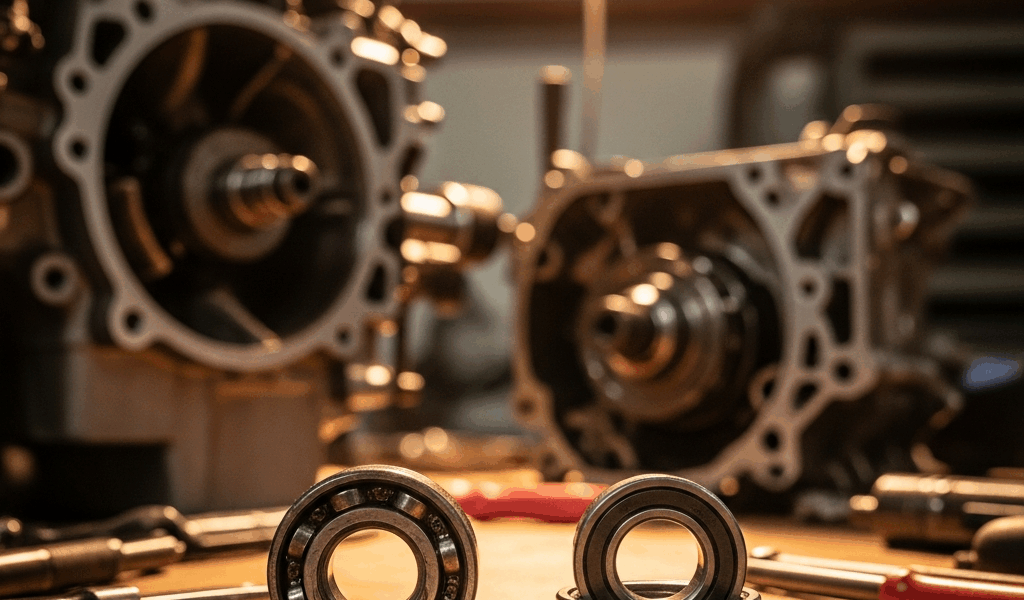
The 1999–2000 996 models came with a dual-row ball bearing design. These are the safer buy in the 996 generation. Dual-row bearings spread load across more contact points. More robust. More expensive to manufacture, which is apparently why Porsche changed course in the first place.
In 2000, Porsche switched to a single-row ball bearing — saving roughly $15 per unit at the factory. That single call affected hundreds of thousands of cars. Single-row bearings concentrate load onto fewer contact points. Under sustained stress, the ball races wear down. Lubrication fails. Metal particles enter the oil circuit. Eventually the bearing seizes, the intermediate shaft locks, and the engine stops. No warning knock. No limp-home mode. Just nothing.
I watched this happen to a customer’s 2003 996 Carrera during a drive down Pacific Coast Highway. Engine went completely silent mid-acceleration. Diagnosis: catastrophic IMS bearing failure. Replacing that engine ran $12,000 installed — and that was 2016 money. Prices are higher now.
The 997.1 is interesting because Porsche reverted to a dual-row design, seemingly learning from six years of single-row failures. But the 997.1 dual-row unit isn’t identical to the 1999–2000 version. Improved, yes — but early 997.1 cars, particularly 2005 and 2006 model years, still see occasional failures in cars driven hard or serviced poorly. Mileage and documented history matter enormously here.
The failure rate isn’t 100 percent — I’d estimate somewhere between 15 and 25 percent of single-row cars fail eventually, depending on driving habits and how well the oil was maintained. That means most of them never blow up. But that’s Russian roulette, and I wouldn’t run a single-row car as a daily driver without addressing the bearing first. Don’t make my mistake.
Prevention — The IMS Solution Retrofit
When the LN Engineering IMS Solution hit the market around 2012, it fundamentally changed what it cost to own a 996 or early 997 with confidence. This is a purpose-built replacement bearing — not a factory component, but an aftermarket engineering solution that outperforms what Porsche originally installed.
The IMS Solution uses a roller bearing design rather than ball bearings. Roller bearings handle shock loading better. Lower friction at higher speeds. LN Engineering ran these through thousands of dyno hours before releasing them commercially. I’ve personally installed around thirty of them over the years and haven’t seen one come back failed. That’s not a small sample size.
While you won’t need a full engine-out rebuild, you will need a handful of hours with a specialist who knows the M96 and M97 platforms. The bearing itself runs $500–$700 depending on your specific engine application. Installed, you’re looking at $1,500–$2,500 total — labor is the bulk of it, because accessing the IMS housing requires pulling the intake manifold, unbolting the timing cover, and draining the oil. Call it a four-to-six-hour job for someone familiar with the platform. Maybe more if they’re not.
First, you should schedule this work alongside a clutch replacement — at least if you plan to keep the car past 80,000 miles. Your 996 or early 997 will need clutch work eventually. The disassembly required overlaps substantially. When you’re already inside the engine bay for clutch work, the additional labor for the IMS retrofit drops to two or three hours. I’ve bundled these jobs dozens of times. It makes financial sense every single time.
Some owners balk at the price. I get it. But compare that $2,000 number to a $12,000 engine replacement or a $15,000-plus crate engine swap. The LN Engineering IMS Solution might be the best option, as the 996 platform requires proactive bearing management. That is because the factory design simply wasn’t built for long-term durability under real-world conditions — and no one at Porsche is going to fix your 2003 Carrera for free in 2025.
One caveat worth mentioning: some shops will blur the line between legitimate IMS Solutions and generic bearing swaps that don’t actually solve the problem. Order the LN Engineering part directly or verify the part number with your shop. Alternatives like the Corkscrew or Mahle bearing exist, though they’re less common. Cross-reference against your specific engine code before anything gets ordered. Don’t let someone sell you a vague “IMS fix” without documentation of what’s actually going in the car.
How to Buy a 996 or 997 Safely
Stepping into a pre-purchase inspection on a 1999–2008 911 requires a different mindset than buying a regular used car. Here’s the approach I’ve refined over years of doing exactly this.
Demand the Service History
Get the complete maintenance records upfront. Look specifically for IMS Solution installation — date, shop, part number if they have it. A documented retrofit changes the risk profile significantly. A 2003 996 Carrera with 70,000 miles and zero evidence of IMS work is a red flag that requires immediate further investigation before you write any checks.
Independent shops often document less formally than dealerships. A private seller might have had the work done years ago and lost the paperwork. That’s not automatically a dealbreaker — but you need to contact the shop directly to verify. Call them. Take the ten minutes.
Engine Code and Production Date
Request the engine code and production date from whoever is selling the car. Cross-reference against a 996/997 IMS bearing compatibility chart — these live on Rennlist and PelicanParts forums, among other places. Thirty minutes of homework here prevents a $12,000 surprise six months from now.
Compression Test and Borescope Inspection
Before committing, request a compression test. All six cylinders should read within 10 percent of each other. A specialist compression test runs $150–$300 and tells you whether internal wear is already progressing. Low or uneven compression means metal-to-metal contact is happening inside that engine — possibly IMS related, possibly not, but the answer matters either way.
If compression is borderline, follow up with a borescope inspection. Remove the spark plugs, insert the camera, look at the cylinder walls. Scoring or pitting means abrasive metal particles have been circulating through the oil. That’s bearing degradation, and it’s expensive to ignore.
Oil Sample Analysis
Pull an oil sample at purchase and send it to Blackstone Laboratories — or a comparable service. They’ll break down ferrous metals, copper content, and other wear indicators. High ferrous content suggests internal friction and potential bearing distress. The test costs about $40 and takes roughly a week. I’m apparently someone who runs oil analysis on every used performance car purchase, and Blackstone works for me while skipping this step never does.
Maintenance Philosophy
Ask the previous owner how they maintained the car. Oil changes every 5,000 miles or every 15,000? Synthetic or conventional? Porsche specifies full synthetic for all 996 and 997 models. Mineral oil degrades faster, reduces lubrication effectiveness, and accelerates bearing wear. An owner who stretched oil changes or ran conventional oil cut corners — and probably cut corners everywhere else too.
IMS Bearing Preemption — The Real Question
If you’re buying a single-row 996 — that’s 2000 through 2005 — without documented IMS work, build a $2,000 retrofit into your offer price immediately. Don’t negotiate around it. Just account for it. If the seller won’t come down to reflect that immediate expense, walk. There are other 996s and early 997s available. You are not paying $35,000 for a car you know needs $2,000 of preventive work on day one.
Get a PPI from a Porsche Specialist
This new idea — using a water-cooled Porsche specialist rather than a general mechanic for pre-purchase inspections — took off several years ago and eventually evolved into the standard practice enthusiasts know and rely on today. A generalist simply won’t know what they’re looking at on an M96. The specialist will pull the oil filler cap, check for sludge, inspect around the IMS area for seepage, and listen to the startup for any rattle or knock suggesting bearing distress. They’ll ask the right follow-up questions about prior repairs.
A thorough PPI runs $200–$500 with a qualified shop. Best money you’ll spend before signing anything.
That’s what makes these cars endearing to us Porsche people — they reward the owner who pays attention. A 996 or early 997 with a documented IMS retrofit, clean service history, and a good PPI behind it is genuinely one of the best sports car values on the market. Ignore the bearing, and you’re carrying a $12,000 liability. Address it properly, and you own a fantastic machine with minimal real-world risk. So, without further ado, go find the right one — and know exactly what you’re buying before you do.



Stay in the loop
Get the latest classic car craze updates delivered to your inbox.