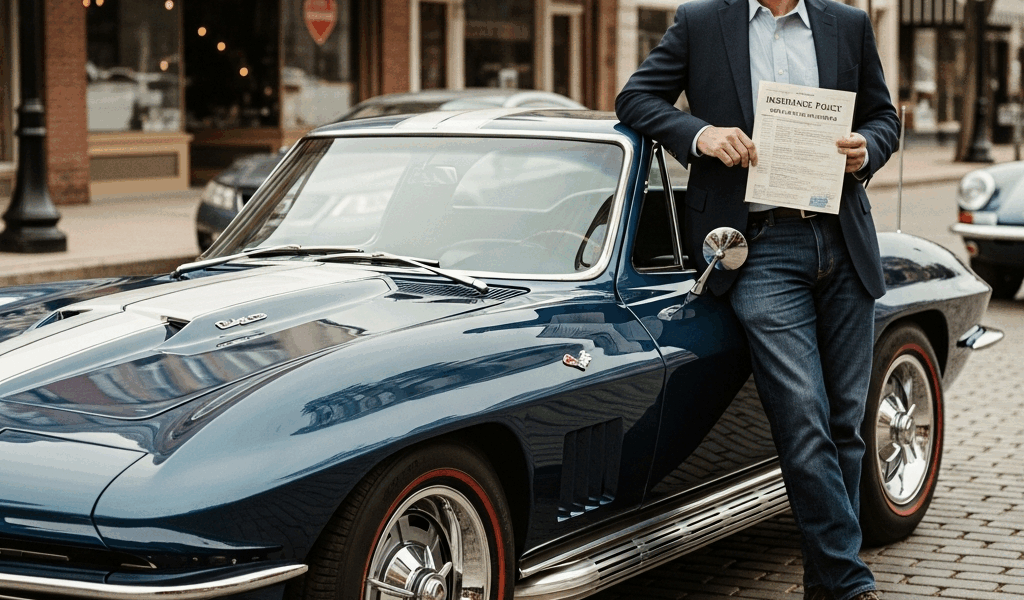
Classic Car Insurance — What You Pay and What It Covers
Classic car insurance has gotten complicated with all the misinformation flying around — and I learned that the hard way. As someone who bought a 1967 Ford Mustang fastback at an estate sale in rural Ohio for $18,400, I learned everything there is to know about insuring collector vehicles. Called my regular insurer first. Gave them the VIN. Got a quote that treated my Mustang like a beat-up Chevy Malibu with 180,000 miles on the clock. Wrong product entirely. Specialist classic car insurance is its own category — and once you actually understand how it works, it’s one of the better deals you’ll find anywhere in the insurance world.
This isn’t a comparison page trying to sell you a policy. It’s what I’ve pieced together after insuring five collector vehicles over roughly twelve years — the mistakes, the questions I didn’t know to ask, and the specific numbers that actually matter when you’re sitting across from an agent or staring at an online quote form.
What Classic Car Insurance Actually Costs
The short answer: less than you expect. I was genuinely shocked the first time I got a quote from the right kind of insurer. A fully restored 1969 Camaro SS valued at $55,000 typically runs somewhere between $400 and $800 per year through a specialist. That same car through a mainstream insurer? Probably $1,200 to $2,000 or more annually — depending on your age and your driving record.
Here’s a rough breakdown of annual premiums you can realistically expect based on vehicle value:
- $10,000–$25,000 vehicle value: $150–$350 per year
- $25,000–$50,000 vehicle value: $300–$600 per year
- $50,000–$100,000 vehicle value: $500–$1,000 per year
- $100,000–$250,000 vehicle value: $900–$2,200 per year
- $250,000+ vehicle value: Typically quoted individually — but 0.5%–1% of value is a common ballpark
These are ballpark figures. Your actual premium shifts based on your state, driving history, where the car lives, and how many miles you’re planning to put on it each year. Storage matters more than most people realize. A car sitting in a locked, climate-controlled garage in a low-crime zip code is genuinely cheaper to insure than the same car parked in a shared lot two blocks from a busy intersection.
Why Classic Car Insurance Is Cheaper Than Standard Coverage
The math isn’t hard to follow. Specialist insurers underwrite classic cars on the assumption that you aren’t commuting to work in a 1957 Chevy Bel Air every morning. You’re probably putting a few hundred miles on it per year — shows, weekend cruises, the occasional car meet. Low mileage means low exposure to accidents. Low exposure means lower premiums. Simple enough.
There’s also a selection effect at work here. People who seek out specialty classic car insurance tend to be careful, enthusiast-type owners — the kind who store cars properly, don’t loan them to neighbors, and aren’t filing small claims every other year. Insurers know this profile well. They price accordingly.
One thing people consistently overlook: specialist insurers actually understand what a restored classic is worth. A 1970 Plymouth ‘Cuda 440 Six Pack isn’t depreciating. It’s going the other direction. Standard insurers depreciate your vehicle year over year regardless. Specialist insurers don’t — which brings us to the most important part of this entire article.
Agreed Value vs. Stated Value — The Critical Difference
Probably should have opened with this section, honestly. This single decision — agreed value versus stated value — determines what you actually receive if your car is totaled or stolen. Getting it wrong is expensive. I know someone who lost a 1963 Split-Window Corvette in a garage fire and discovered his stated value policy didn’t pay what he’d assumed it would. That’s not a lesson anyone wants to learn firsthand.
Agreed Value — What It Means
But what is agreed value? In essence, it’s a contract where you and the insurer lock in the car’s worth before anything goes wrong. But it’s much more than that. If the car is a total loss, you receive that full agreed amount — no depreciation, no adjuster arguing the market has softened, no deductibles carving into the payout on some policies. You agree the car is worth $72,000, it burns down, you get $72,000.
That number gets established at the start of the policy, based on documentation you provide — an independent appraisal, photographs, sometimes receipts from restoration work. Most specialist classic car insurers offer agreed value as their default product. Hagerty, for example, built their entire brand around it.
Stated Value — What It Actually Does
Stated value sounds like agreed value. It is not. This is where people get hurt.
With a stated value policy, you name a value when you buy coverage. But the insurer keeps the right to pay either the stated value or the actual cash value at the time of loss — whichever is lower. Read that again. They can pay less than what you stated if they decide the market value dropped since you bought the policy.
Real example: You state your 1965 Shelby GT350 replica is worth $45,000. Market softens a bit. Car gets stolen. Adjuster determines actual cash value is $38,000. You get $38,000, minus your deductible. That gap — the money you thought you were protecting — wasn’t protected at all. Don’t make my mistake. Pay the modest premium difference for agreed value. Every single time.
How to Verify Which One You Have
Pull out your declarations page. Look for the phrase “agreed value” or “guaranteed value.” If you see “stated value,” “ACV,” or any reference to actual cash value in the loss settlement language, you have a stated value policy. Still not sure? Call your insurer directly and ask: “If my car is a total loss tomorrow, exactly how much will you pay me?” Make them give you a specific number — and get it in writing.
Mileage Limits and Usage Restrictions
I was surprised by my first renewal letter. Buried in the language was a 2,500-mile annual cap — and I’d driven close enough to trigger a review flag. Nobody penalized me, but it was a reminder that classic car policies come with real strings attached. Those strings aren’t unreasonable. You just need to know what they are before you sign anything.
Typical Annual Mileage Allowances
Most classic car policies fall into a handful of tiers:
- 1,000–2,500 miles per year: The most common entry-level tier. Works for show cars and occasional weekend drives.
- 2,500–5,000 miles per year: More flexible — covers regular car shows, local cruises, and the occasional longer road trip.
- 5,000–7,500 miles per year: Available from some insurers for drivers who use their classic regularly on weekends.
- Unlimited mileage: Hagerty and a few others offer this, though it typically comes with stricter usage restrictions — no daily driving or commuting.
The mileage tier you choose directly hits your premium. Jump from a 2,500-mile plan to a 5,000-mile plan and expect to pay 20–35% more annually, depending on the insurer and vehicle value.
Usage Restrictions — What’s Actually Prohibited
The mileage cap is part of a broader set of usage restrictions. They vary by insurer, but common exclusions include:
- Daily commuting to work or school
- Using the vehicle for hire — rideshare, tours, that sort of thing
- Track days and competitive racing events (sometimes available as a separate add-on)
- Primary transportation — most policies require you to own at least one other vehicle for regular use
That last point is their way of confirming the classic is actually a collector car, not your daily driver with a custom paint job and vintage plates.
How Insurers Enforce Mileage Limits
Honestly, enforcement is less aggressive than you’d probably fear — but that doesn’t mean it doesn’t happen. At claim time, an adjuster may ask for odometer readings from maintenance records, state inspection reports, or timestamped photos. A significant discrepancy between stated mileage and the evidence can get a claim denied or reduced outright.
Some insurers ask for an odometer reading at renewal. A few are experimenting with optional GPS-based verification programs — participation usually comes with a discount attached. Either way, keep your own mileage log. Takes thirty seconds per drive to jot down a start and end reading. It costs you nothing and protects you completely if a dispute ever comes up.
Best Classic Car Insurance Companies Compared
Three names dominate this space: Hagerty, Grundy, and American Collectors Insurance. Others exist — Heacock Classic, J.C. Taylor, Chubb for higher-value vehicles — but these three handle the largest share of collector car policies in the country and are worth understanding in detail.
Hagerty
Hagerty is the largest specialist classic car insurer in North America — not even close. They’ve been at this since 1984 and have essentially built the infrastructure the collector car market now runs on, including their own valuation tool, which is genuinely useful when you’re trying to establish insured value for a car that doesn’t have obvious comps.
What Hagerty does well: agreed value coverage is standard, their claims process has earned a solid reputation among enthusiasts, and the membership perks — roadside assistance designed specifically for classic cars, access to valuation data, event programming — add real value beyond the policy itself. Their roadside assistance people are apparently trained to handle collector vehicles specifically. They won’t drag your unrestored Hemi Challenger onto a flatbed with improper equipment.
Where they differ: Hagerty has evolved into a broader “automotive lifestyle” brand, which some purists find irritating. Pricing is competitive but not always the lowest available. For very high-value vehicles, their coverage caps may require supplemental policies.
Grundy
Grundy has been insuring collector cars since 1947 — longer than Hagerty by nearly four decades. Their policies are straightforward and no-frills in the best possible way. They apparently pioneered agreed value coverage for collector cars, and their underwriting tends to be flexible when it comes to vehicle eligibility.
What Grundy does well: often competitive on price, particularly for single-vehicle policies on cars valued between $15,000 and $75,000. Their agreed value terms are clean and well-documented. They also have a solid reputation for not overcomplicating the claims process — which matters more than people realize until they’re actually filing one.
Where they differ: less brand infrastructure than Hagerty. No valuation tool, fewer membership benefits, smaller online presence overall. If you want a solid policy without an ecosystem of extra features built around it, Grundy is worth quoting seriously.
American Collectors Insurance
American Collectors Insurance might be the best option for newer collectors or drivers who want flexibility in how they actually use their car, as this insurer requires less rigid mileage commitments than most competitors. That is because their underwriting accommodates higher annual mileage allowances more easily — and they tend to price reasonably on vehicles from the 1980s and 1990s era, cars that qualify as classics but aren’t the mainstream muscle cars other insurers chase aggressively.
What American Collectors does well: flexibility in vehicle eligibility, competitive pricing on modern classics — think 1987 Buick Grand National, 1993 Ford SVT Cobra — and a quoting process that doesn’t feel like pulling teeth. They’re also generally strong on exotic and foreign classics.
Where they differ: smaller company, less name recognition. Some collectors report an excellent claims experience. Others have noted slower response times compared to Hagerty. Worth getting a quote for comparison, especially if your vehicle is post-1980.
A Note on Getting Multiple Quotes
Get at least three quotes before you bind coverage. Premiums for the exact same car can vary 40% or more between insurers — depending on how they underwrite your specific vehicle and location. I burned myself by assuming Hagerty would always be cheapest. For my ’67 Mustang, Grundy came in $180 lower for equivalent coverage. I now treat getting multiple quotes as mandatory, not optional.
Also verify you’re actually comparing the same product. Agreed value versus stated value. Same liability limits. Same deductible. Same mileage allowance. A cheaper policy built around stated value isn’t a better deal — it’s a different product that happens to cost less and pay less when something actually goes wrong.
Classic car insurance is genuinely one of the more favorable corners of the insurance market — lower premiums, coverage that actually fits what you’re doing with the car, and insurers who understand what your vehicle is worth. The main ways people go wrong are using a standard auto policy, skimming past the agreed versus stated value language, or ignoring mileage restrictions until there’s a claim on the table. Understand those three things going in, get multiple quotes, and you’ll be in a considerably better position than most first-time collector car owners.




Stay in the loop
Get the latest classic car craze updates delivered to your inbox.